First
Last
email@email.com
The Market Correction Is Here: Why Discipline Matters Most During Volatility
Market
July 17, 2026


Skye
Decoding Institutional Liquidity Sweeps
Summary
- Market weakness has accelerated as investors moved from selective sector rotation into a broader risk-off environment driven by geopolitical uncertainty, semiconductor weakness, and renewed concerns surrounding inflation.
- Despite short-term pressure, fundamentally strong companies are often the first to experience sharp declines during market sell-offs as investors reduce risk and rebalance portfolios.
- A systematic investment approach becomes increasingly valuable during periods of fear-driven volatility, helping investors focus on business fundamentals rather than short-term sentiment.
- Historical market corrections have repeatedly created opportunities for investors who remain patient and positioned to capture recoveries in high-quality companies.
- Arakawa Quant continues to focus on identifying companies with strong fundamentals, improving earnings trends, and long-term growth potential through quantitative analysis.
Market Overview: From Sector Rotation to Broad Risk-Off Selling
After several weeks of increased market rotation, equity markets recently entered a more challenging phase as investors shifted from selective positioning into broader risk reduction.
Earlier market weakness was largely characterized by capital moving between sectors, with investors rotating toward defensive assets, energy exposure, and income-oriented opportunities. However, the environment changed as geopolitical tensions intensified, semiconductor stocks weakened, and concerns around artificial intelligence-related valuations triggered broader selling pressure.
Although inflation data showed signs of improvement and reinforced expectations that price pressures may continue moderating, renewed geopolitical risks introduced fresh uncertainty into markets.
The escalation of tensions in the Middle East contributed to renewed volatility in energy markets, with crude oil prices moving higher as investors evaluated potential risks to global energy supply chains. Rising energy prices also complicated expectations around future monetary policy, as markets assessed whether inflation pressures could remain persistent.
As uncertainty increased, investors moved toward more defensive positioning, creating additional pressure on growth-oriented sectors.
Technology and AI Infrastructure Face Short-Term Pressure
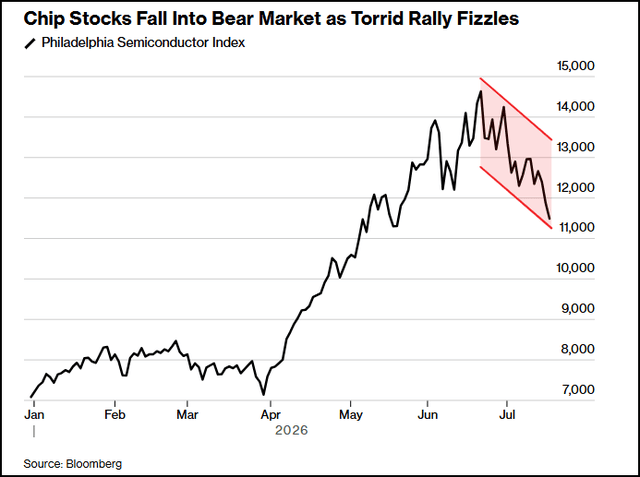
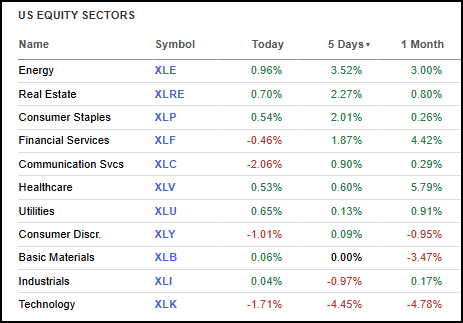
The technology sector experienced some of the most significant selling pressure during the recent market decline.
Semiconductor companies, AI infrastructure suppliers, and data center-related businesses were among the areas most affected as investors reduced exposure to previously strong-performing growth themes.
The decline reflects a common market pattern: companies with strong long-term growth prospects often experience sharp short-term declines during periods of market stress because they tend to be among the most liquid and heavily owned positions.
However, short-term price movements do not always reflect changes in business fundamentals.
Many companies supporting artificial intelligence infrastructure continue benefiting from long-term trends, including increasing computing demand, expanding data center investment, and the continued adoption of AI technologies across industries.
The recent volatility represents a shift in investor sentiment rather than necessarily a deterioration in the underlying structural growth drivers.
Arakawa Quant Perspective: Why Systematic Investing Matters During Corrections
Market corrections often create the greatest emotional pressure for investors. Fear-driven selling can push high-quality companies below levels justified by their underlying fundamentals, creating potential opportunities for disciplined investors.
At Arakawa Quant, our investment framework is designed to reduce emotional decision-making by focusing on measurable factors, including:
- Business quality
- Earnings growth
- Profitability trends
- Valuation efficiency
- Market momentum
- Analyst expectation changes
During periods of volatility, quantitative analysis becomes increasingly important because market sentiment can temporarily overpower company fundamentals.
Strong companies with durable competitive advantages may experience significant price declines during broad market sell-offs, even when their earnings outlook and long-term growth potential remain intact.
Historical Market Corrections: Volatility Often Creates Opportunity
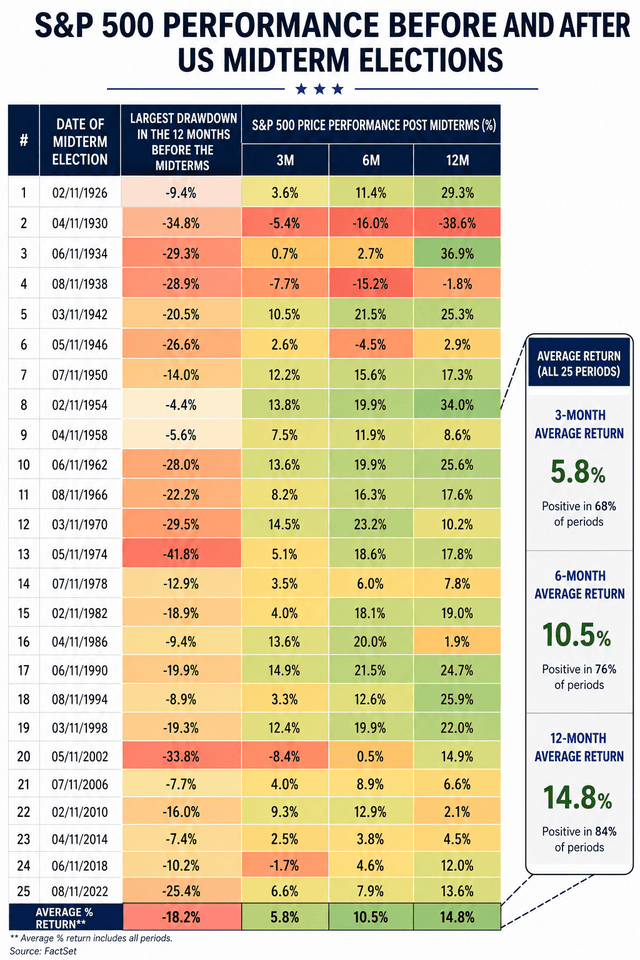
Market downturns have historically tested investor patience, but they have also created some of the most attractive opportunities for long-term investors.
Previous periods of significant market weakness have shown that companies with stronger fundamentals often recover more quickly once market sentiment stabilizes.
During past corrections, investors who maintained discipline and focused on high-quality businesses were often rewarded as markets recovered and capital returned to fundamentally strong companies.
This pattern reinforces an important principle: short-term market volatility does not necessarily represent permanent damage to high-quality businesses.
Instead, corrections frequently create opportunities to acquire strong companies at more attractive valuations.

Current Market Environment: Balancing Growth and Defensive Positioning
The current environment reflects a combination of several market pressures, including inflation uncertainty, interest rate expectations, geopolitical risks, and changing investor sentiment.
In such conditions, maintaining portfolio balance becomes increasingly important.
Investors may benefit from combining exposure to companies with strong structural growth trends alongside businesses with more defensive characteristics and stable cash generation.
Artificial intelligence, digital infrastructure, healthcare innovation, and other long-term growth themes remain important areas of focus, while risk management remains essential during periods of elevated uncertainty.
Quantitative Strategy Outlook: Staying Prepared for the Next Opportunity
Market corrections rarely unfold in a straight line. Attempting to predict the exact bottom often leads to emotional decision-making and missed opportunities.
A disciplined approach focuses instead on preparation, patience, and identifying companies where strong fundamentals remain intact despite temporary market pressure.
At Arakawa Quant, our models continue evaluating opportunities based on fundamental strength, valuation attractiveness, and improving market conditions.
Periods of uncertainty often create a gap between price and value. When market sentiment eventually improves, companies with strong business foundations and sustainable growth drivers are often positioned to recover more strongly.
We’ve highlighted the chart below before, but it’s worth underscoring that Alpha Picks is rooted in the same Quant System, which has a much longer track record than the portfolio and has already navigated several distinct market regimes since its inception. Since 2010, the market has pulled back on these dates by more than 15%: July 1, 2010; August 8, 2011; December 20, 2018; March 9, 2020; and May 9, 2022. Investors who purchased the top 10 Quant Strong Buy stocks during these downturns and held them for two years saw average gains of 117%, more than doubling the S&P 500's 50% return. This analysis shows that rebounds are typically led by stocks with the strongest fundamentals, a cornerstone of the Alpha Picks selection process.
Conclusion
The recent market decline highlights the importance of maintaining discipline during periods of volatility.
While geopolitical risks, inflation concerns, and technology sector pressure have created short-term uncertainty, long-term investment opportunities often emerge during periods when market sentiment becomes excessively negative.
High-quality companies can experience temporary price declines even when their underlying business performance remains strong.
Through quantitative analysis and systematic evaluation, Arakawa Quant focuses on identifying companies with durable fundamentals and long-term growth potential.
Corrections may create uncertainty in the short term, but for prepared investors, they can also create opportunities to invest in exceptional businesses at more attractive valuations.
In an era of information overflow, alpha lies in asymmetric execution, not intuitive consensus.
Skye
SMC Market Analyst
Subscribe to our newsletter
Get the insider insights you need to scale, straight to your inbox.




Decode the Market. Quantify Your Edge.
Elite quantitative models and real-time execution signals. Trade with institutional power.

Copyright © 2026 Hong Kong Arakawa Limited. All rights reserved.


%2C%20Color%3DNegative.svg)